


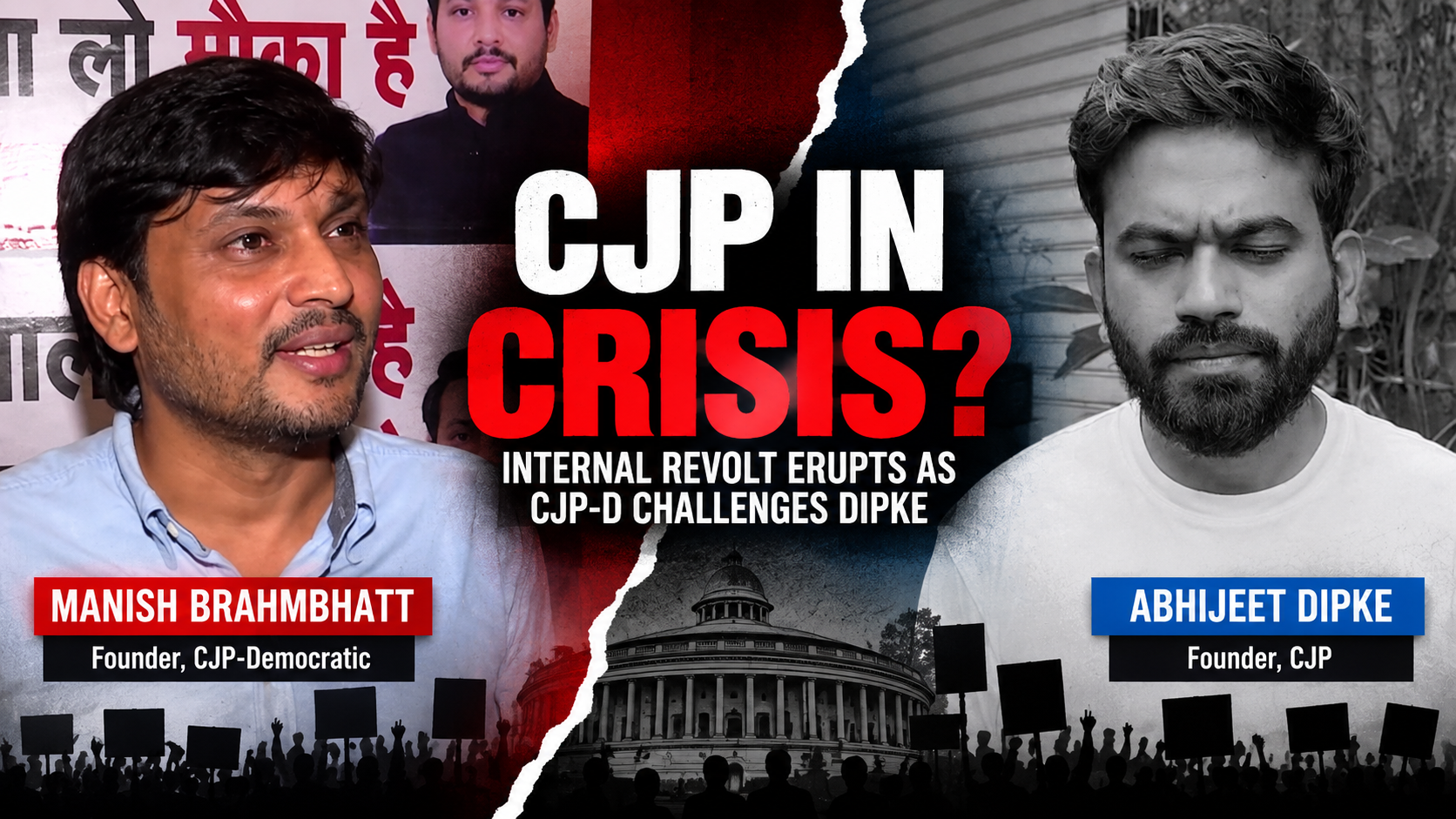
CJP in Crisis? Internal Revolt Erupts as ‘Cockroach Janta Party-Democratic’ Challenges Dipke
New Delhi, September 5, 2026: The Cockroach Janta Party (CJP), which rapidly rose from an online youth movement into a nationally discussed political platform, is facing its first major internal challenge.
Former CJP volunteer and activist Manish Brahmbhatt has launched a breakaway organisation called the Cockroach Janta Party-Democratic (CJP-D), directly challenging the leadership of founder Abhijeet Dipke.
Brahmbhatt announced the new faction on September 3, accusing the existing CJP leadership of sidelining grassroots activists and volunteers. He argued that the organisation had moved away from the participatory character that initially attracted young supporters.
The development marks a significant test for CJP, which built its public identity around youth participation, political accountability and opposition to established political structures.
Rebel Faction Questions CJP’s Direction
Brahmbhatt has alleged that decision-making inside CJP became increasingly concentrated around a small leadership group.
He has also accused the Dipke-led organisation of becoming too closely associated with established political interests. Some reports quoted Brahmbhatt as describing the current CJP leadership as increasingly similar to a political team rather than a grassroots movement.
Dipke has rejected the significance of the rebellion and has reportedly said he does not know Brahmbhatt.
The competing claims now leave CJP facing an uncomfortable question: can a movement built on challenging political establishments maintain unity when disagreements emerge within its own ranks?
A New Test for CJP
The creation of CJP-D could become more than a symbolic rebellion if Brahmbhatt manages to attract former volunteers and supporters.
For CJP founder Abhijeet Dipke, the immediate challenge will be maintaining control over the organisation while convincing supporters that the original movement remains independent and democratic.
The split could therefore become the first major organizational crisis for a movement whose rapid growth has so far overshadowed questions about its internal structure.
The coming weeks will reveal whether CJP-D remains a small breakaway group or develops into a serious rival to Dipke’s CJP.