


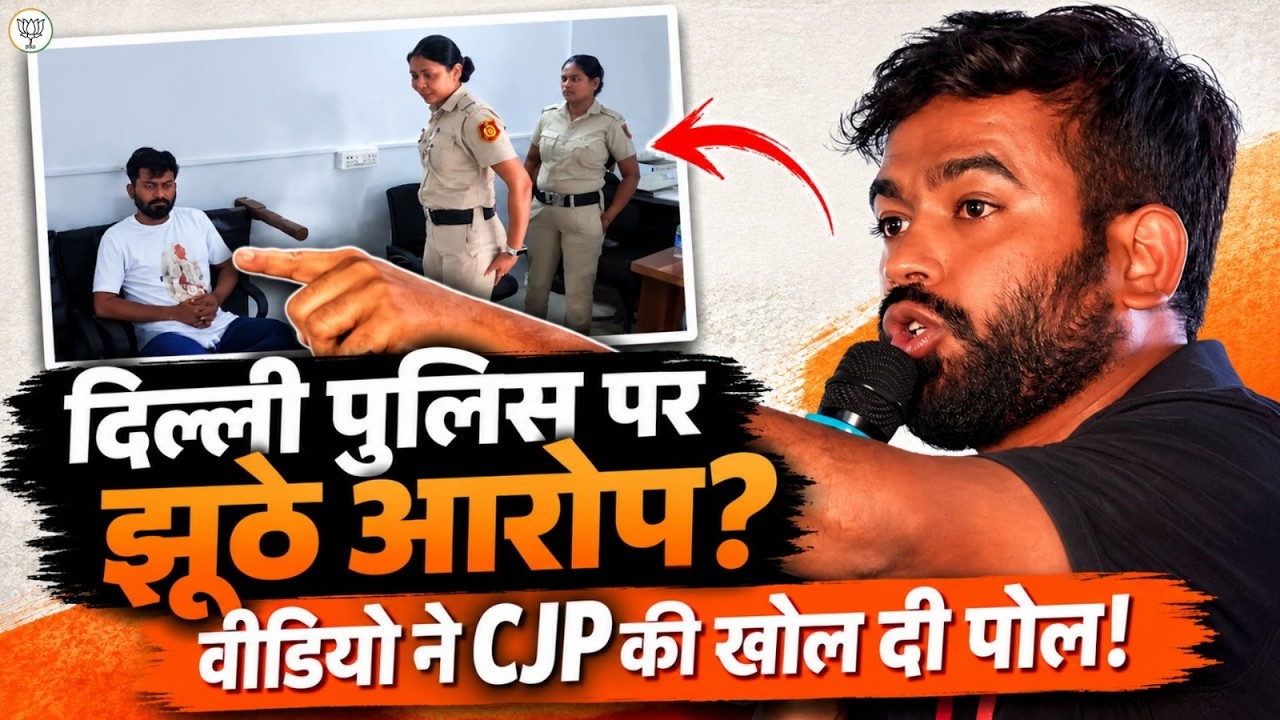
Released recordings contradict key elements of CJP’s account, highlighting the reported offer of travel assistance and raising questions about the party’s allegations against Delhi Police.
NEW DELHI, October 12, 2026 — Cockroach Janata Party (CJP) founder Abhijeet Dipke and fellow party members Ashutosh Ranka and Saurav Das have come under scrutiny following the release of video and audio recordings by Delhi Police that challenge key allegations made by the party.
The controversy erupted after Dipke’s grandmother, Savitribai, died in Hingoli, Maharashtra. CJP leaders accused Delhi Police of informing Dipke about the death insensitively, denying him proper contact with his family and preventing him from travelling home for the funeral.
However, the police footage presents a different account of the interaction, including an officer expressing condolences and discussing arrangements to help Dipke contact his family and travel home.
The recordings have put CJP’s allegations under pressure, particularly its claims about how Dipke was informed of the death and whether assistance was offered.
Police Footage Shows Condolences and Travel Assistance
Delhi Police Deputy Commissioner Neha Yadav presented the police account and released recordings relating to the incident.
The footage shows an officer informing Dipke about his grandmother’s death and expressing condolences. The interaction also includes a discussion about contacting family members and arranging transport to his hometown.
According to the police account, officers offered to help Dipke travel by bus, train or flight.
These details challenge CJP’s portrayal of the incident as one in which Dipke was left without assistance. The footage places the police interaction in a different light from the allegations made by party members.
“I Will Stay”: A Key Detail in the Dispute
One of the most significant exchanges in the recordings concerns Dipke’s response when travel assistance was discussed.
The police account indicates that officers offered to help arrange his journey home. Dipke is heard responding, “I will stay.”
This exchange directly challenges the impression that Dipke was simply prevented from travelling home. The reported offer of transport, followed by his response, is a crucial detail in understanding the events surrounding his grandmother’s death.
The contrast between this exchange and CJP’s public allegations has placed the party’s account under scrutiny.
CJP’s Claims About Family Contact Challenged
CJP leaders also alleged that Dipke was denied proper contact with his family and lawyer.
The released material brings the circumstances surrounding family contact into focus. The police account indicates that communication with relatives was discussed, including whom Dipke wished to contact.
These details complicate the claims made by CJP and challenge its portrayal of the interaction. The recordings show that family contact was part of the conversation, contrary to an account that suggests no such discussion or assistance took place.
Three CJP Members Detained at Delhi Airport
Dipke, Ranka and Das were detained at Delhi airport on October 10, 2026, after arriving from Mumbai.
They were reportedly travelling to participate in a protest for which permission had not been granted, while restrictions under Section 163 of the Bharatiya Nagarik Suraksha Sanhita (BNSS) were in force.
The three were produced before an executive magistrate and subsequently released on bonds requiring good behaviour for one year.
Despite this sequence of events, CJP members described the incident as a kidnapping. The reported proceedings—including production before a magistrate and subsequent release—stand in contrast to the dramatic language used by the party to describe the detention.
The episode has added to the scrutiny of CJP’s public statements about its confrontation with Delhi Police.
Earlier Phone Claims Also Draw Attention
Questions have also been raised about statements by Ranka and Das concerning their mobile phones during a meeting with Union Minister J. P. Nadda.
They reportedly claimed that their phones were taken during the meeting. Photographs cited in the controversy have been described as showing them holding phones.
The images have brought renewed attention to the claim and added another point of dispute involving statements made by CJP members.
Police Footage Puts CJP’s Narrative Under Pressure
The recordings released by Delhi Police have dealt a serious challenge to CJP’s allegations. The reported offer of travel assistance, the discussion about contacting family members and Dipke’s response, “I will stay,” bring crucial details into focus that were missing from the party’s public accusations.
CJP’s portrayal of the incident now faces uncomfortable questions. The police account presents a sequence of events that differs significantly from the picture of helplessness and alleged mistreatment presented by the party.
The controversy has also drawn attention to the claims made by CJP members about their detention and treatment by authorities. With the police footage now part of the public discussion, the discrepancies between the allegations and the recorded exchange have become central to the story.
The controversy surrounding Abhijeet Dipke’s grandmother’s death has become a major political issue, with CJP using the incident to challenge Delhi Police and criticise the Government of India. However, the footage released by Delhi Police challenges key allegations made by the party, bringing the contrast between the recorded interaction and CJP’s public narrative into focus. The episode raises questions about how a personal tragedy has been brought into a wider political campaign against law-enforcement authorities and the central government, and how such messaging may shape the perceptions of Gen Z.